
Aug 13, 2026
 A venue can have a commercial kitchen that looks more than capable and still not have enough refrigerated space for your event. We run into this distinction often because kitchens are usually judged by their ovens, prep counters, sinks, and cooking equipment. Refrigeration gets treated as a given. It should not. A kitchen that handles the venue’s normal service may struggle when a wedding, corporate function, festival, or private event brings in several hundred guests, early deliveries, prepared food, and cases of drinks. Once those items start arriving, a cooler that seemed generous during a site visit can become crowded very quickly. Before we count on the venue’s refrigeration, we look at what needs to be kept cold, when it arrives, how long it stays, and who else needs access to the same space.
Start With the Food, Not the Kitchen
The square footage of the kitchen is not a useful measure of refrigerated capacity. What matters is the amount and type of product that has to remain cold. A catered event may involve raw meats, dairy, produce, desserts, prepared dishes, sauces, garnishes, beverages, and ingredients reserved for backup. Some of those products may arrive long before service begins, while others may be prepared hours ahead and need to stay refrigerated until they are needed. A 300-person wedding, for instance, puts a very different load on a cooler than an ordinary evening at the same venue. We recommend estimating the actual refrigerated inventory before deciding that the venue has enough room. The estimate does not need to be perfect. It needs to be realistic enough to account for the menu, guest count, delivery schedule, and preparation window.
Find Out Who Actually Uses the Cooler
There is another detail worth confirming early: whether the cooler is truly available to your team. A venue might have a large walk-in, but that does not mean your caterer gets every shelf. Venue staff may need storage for their own operations. Another event may be sharing the kitchen. Beverage service may have separate requirements. Some venues also control delivery times or limit when outside vendors can access storage areas. We recommend asking how much refrigerated space will be reserved for your event, when your team can use it, and what else will be stored there. It is a mundane question, but it can save a great deal of scrambling later. The problem usually becomes obvious when a supplier arrives with a full delivery, and the available shelves are already occupied.
Delivery Timing Matters as Much as Volume
Refrigeration needs are shaped by the clock, not just by the quantity of food. If ingredients arrive at 9 a.m. and dinner is not served until 7 p.m., those products need suitable storage for most of the day. The same applies to food prepared in advance. A catering team might have trays, sauces, desserts, or other prepared items ready well before guests arrive, and every container takes up physical space. Large deliveries can make the situation even tighter because several cases or boxes may arrive at once. We recommend mapping the event from the first delivery through the end of service and noting what needs to remain refrigerated during each stage. Once you see the entire timeline, it becomes much easier to judge whether the venue’s existing equipment can actually carry the load.
Do Not Forget the Drinks
Beverages are easy to underestimate because they are often planned separately from the food. At a large event, that can be a mistake. Cases of bottled water, soft drinks, juices, mixers, and other chilled beverages can consume a significant amount of cooler space. Desserts, dairy products, and backup ingredients add to the demand. Then there is the question of what happens after service. If leftovers or unopened temperature-sensitive products need to remain cold, the refrigeration plan still has to work after the guests have gone home. We prefer to look at the complete inventory instead of calculating only what needs to be stored until the first plate leaves the kitchen. Before committing to the venue’s refrigeration, we recommend checking:
- Guest count and serving volume
- Food and ingredient quantities
- Beverage storage requirements
- Delivery and preparation schedule
- Available venue cooler space
- Other vendors sharing storage
- Plans for refrigerated leftovers
These are simple questions, but they give us a much better picture of the actual storage requirement. A kitchen can have plenty of counter space and excellent cooking equipment while still being short on the one thing that cannot be improvised easily once food starts arriving.
Know When You Need More Cold Storage
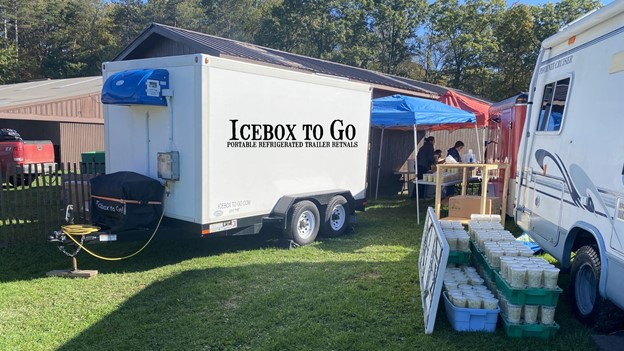
Packing an already crowded cooler more tightly is rarely the answer. It makes products harder to locate, leaves less room for staff to work, and turns each new delivery into a small logistical puzzle. For events where the venue cannot provide enough capacity, refrigerated trailer rentals for caterers can give the catering team dedicated cold storage close to the event. Ingredients, prepared food, beverages, and other temperature-sensitive products can be kept in additional refrigerated space instead of competing for room inside the venue. More capacity can also make the kitchen itself easier to manage because staff are not constantly moving containers around simply to make room for another delivery.
Temporary Demand Does Not Always Need a Permanent Fix
A short-term refrigeration problem does not necessarily justify buying or installing permanent equipment. A restaurant might have plenty of capacity most of the year but need more during the holidays. A catering company may take on several unusually large events during a busy season. A venue might host a festival or corporate gathering that requires much more refrigerated storage than its regular schedule. A restaurant undergoing renovation may temporarily lose access to its normal cooler altogether. In these situations, refrigerated trailer rentals for commercial use can provide additional capacity for the period when it is actually needed. That distinction is important. If the demand is temporary, a temporary solution can be the more sensible choice.
Plan Before the First Delivery
Refrigeration is much easier to arrange before the event gets busy. Once food deliveries are arriving, chefs are preparing dishes, and staff are setting up service, nobody wants to stop and figure out where several cases of perishable food should go. We recommend confirming the venue’s usable cooler capacity, estimating the refrigerated inventory, reviewing delivery and preparation times, and deciding whether additional storage is needed while there is still time to coordinate it properly. If a refrigerated trailer will be used, placement matters too. The unit needs to be accessible to the people using it without creating an awkward path for deliveries, staff, or guests. A little planning here can prevent a surprisingly large headache later.
Conclusion
A commercial kitchen gives your team a place to prepare food, but it does not automatically give you enough room to store everything that comes with a large event. The better question is whether the venue can handle your actual food volume, beverage inventory, delivery schedule, preparation timeline, and post-service storage needs. We help businesses and event teams think through these temporary refrigeration requirements before limited cooler space becomes an operational problem. Icebox to Go provides refrigerated storage when existing capacity is not enough, including for large events, seasonal demand, renovations, and other temporary situations. If you are planning an event and are unsure whether the venue has enough cold storage, contact us at Icebox to Go with your guest count, schedule, and estimated inventory. We can help you determine what additional refrigeration makes sense and get the plan sorted before the first delivery arrives.
FAQs
Ans:- Check your food and beverage volume, delivery schedule, guest count, and the cooler space actually available to your catering team.
Ans:- Yes, it can provide additional temperature-controlled storage when the venue’s existing refrigeration cannot handle the event’s inventory.
Ans:- It is best to arrange it before food deliveries begin, giving your team time to plan placement, access, and storage.
Ans:- Yes, cases of bottled drinks, juices, mixers, and other chilled beverages can take up considerable cooler space at larger events.
Ans:- Yes, temporary refrigerated storage can help maintain cold-storage capacity when normal refrigeration is temporarily unavailable.
